
Mobility plays an important role in everyday comfort and movement. When your joints move well and your muscles are strong and balanced, daily activities such as walking, turning or standing up from a chair become much easier.
These simple mobility checks are designed to assess flexibility, strength and balance. They can be performed almost anywhere and only take a few minutes to complete. Try each test and see how your body responds.
Exercise 1: Neck Rotation
Purpose: Measures how far and evenly you can turn your neck.
- Sit comfortably in a chair with your back upright.
- Keep your shoulders still and gently against the chair.
- Slowly turn your head to the left, as if you are looking over your shoulder.
- Notice how far you can rotate and whether the movement feels comfortable.
- Return to the centre and repeat on the right side.

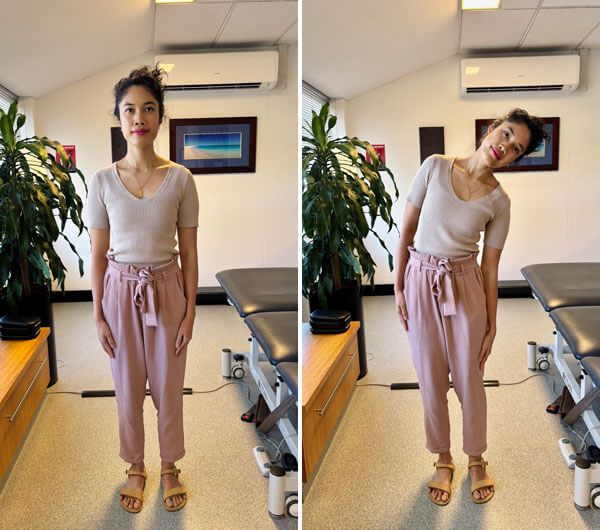
Exercise 2: Trunk Side Bend
Purpose: Assesses side-to-side flexibility through the spine and torso.
- Stand upright with your feet comfortably apart.
- Keep your body facing forward.
- Slowly slide one hand down the outside of your leg.
- Bend sideways only — avoid leaning forward or backward.
- Return to the centre and repeat on the opposite side.
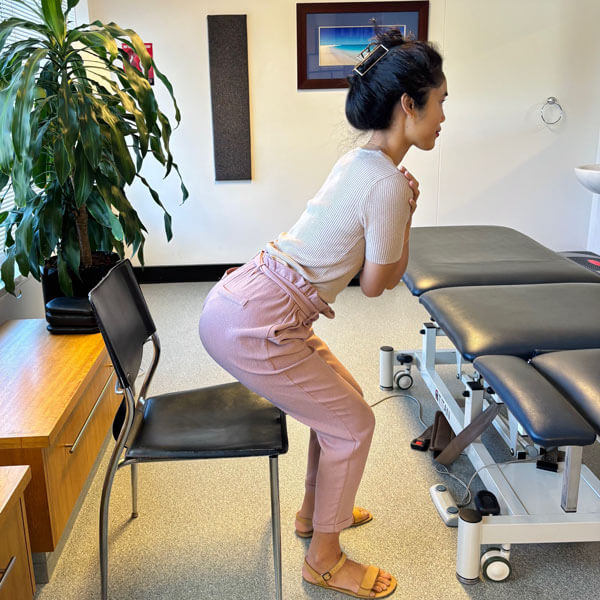
Exercise 3: Sit-to-Stand Test
Purpose: Evaluates lower body strength and functional movement.
- Sit in the middle of a sturdy chair.
- Cross your arms across your chest.
- Keep your back straight and feet flat on the floor.
- Stand up fully without using your hands.
- Slowly sit back down again.
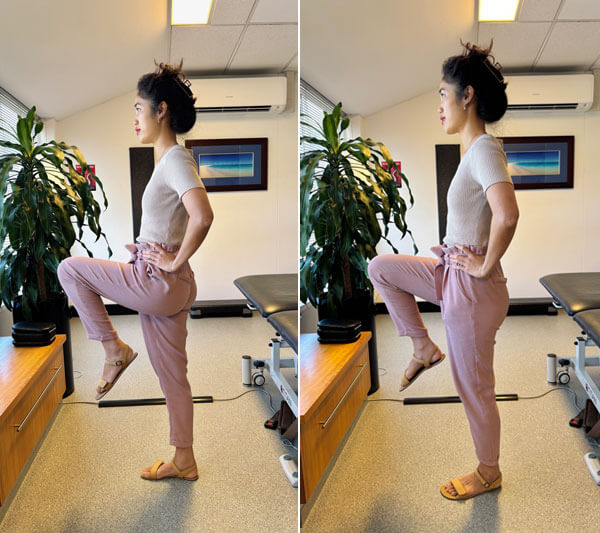
Exercise 4: Single Leg Balance Test
Purpose: Measures balance and stability on each leg.
- Stand upright with your feet together.
- Place your hands on your hips.
- Lift one foot off the ground without letting your legs touch.
- Keep your posture upright and try to stay still.
- Time how long you can maintain your balance.
- Repeat on the other leg.
Why Mobility Matters
Good mobility supports better posture, safer movement and improved physical performance. It also reduces the risk of falls and injuries, particularly as we get older.
Performing simple checks like these can help you become more aware of how your body moves. If you notice significant stiffness, weakness or imbalance, it may be worth speaking with a health professional for further assessment and guidance.
Regular movement, stretching and strengthening exercises can all help improve mobility and keep your body moving comfortably.